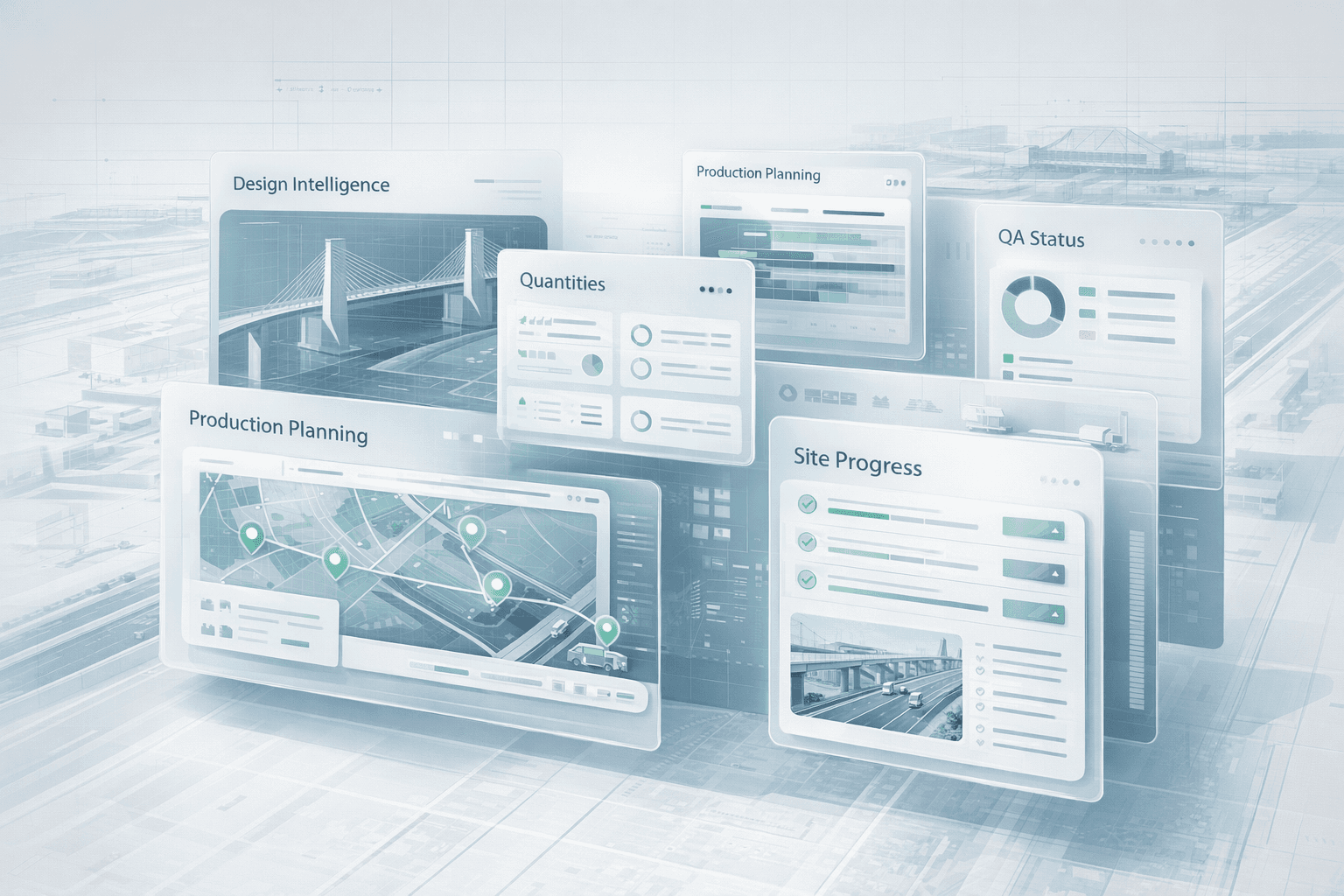
AI-native construction command center
A single command view helps teams move from fragmented reporting to coordinated action across engineering, manufacturing, and delivery.
Platform / Technology
This page explains why Nirman AI is more than a digital brochure. It is framed as a working command system across design, quantities, production, QA/QC, logistics, and site visibility.
Why AI-native
Signals from design, planning, manufacturing, QA, logistics, and installation inform one another instead of living in separate reporting layers.
Design intelligence
Production control
Delivery visibility
Command center
Command View
The Nirman AI platform connects design, quantities, production, quality, dispatch, and site visibility in one enterprise-ready operating layer.
A single command view helps teams move from fragmented reporting to coordinated action across engineering, manufacturing, and delivery.
Architecture
The website positions the platform as decision infrastructure. It captures upstream inputs, operationalizes them in factory workflows, and keeps leadership teams aligned with grounded signals.
AI-native means workflows improve decision quality before execution problems hit the site.
Role-based views connect engineering, operations, project controls, and leadership teams.
The system is structured for future digital twin, analytics, and case-study expansion.
Modules
Each module is written to show practical operating value for enterprise construction and manufacturing teams.
Interrogate drawings and models to align design intent, quantities, and structural readiness.
Track component counts, material demand, package value, and cost exposure in one operating layer.
Sequence lines, molds, labour, and materials based on downstream commitments and factory capacity.
Monitor throughput, bottlenecks, output readiness, and deviations across manufacturing workflows.
Capture inspection outcomes, non-conformance trends, and traceable release status component by component.
Match dispatch sequencing to site readiness, transport constraints, and installation windows.
Relate planned versus delivered versus installed states so field teams can act before drift compounds.
Aggregate commercial, operational, and delivery signals for leadership-level decisions.
Dashboards
The platform narrative covers engineering, operations, leadership, and delivery teams with clear responsibilities and relevant signals.
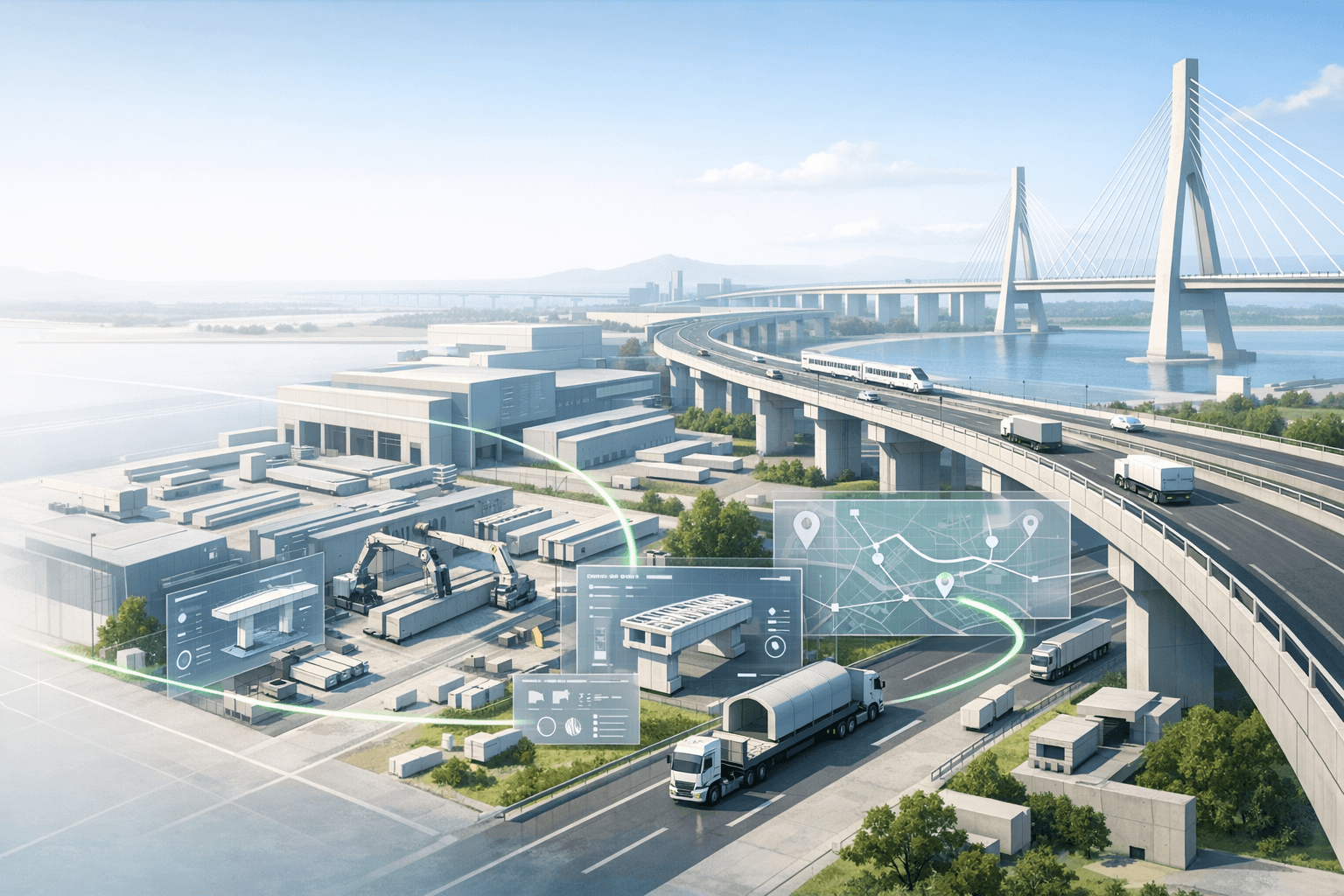
The platform is built for real manufacturing programmes and site outcomes, not isolated dashboard consumption.
Design alignment, quantity impact, release readiness, and structural issue tracking.
Line planning, mold allocation, labor coordination, throughput, and bottleneck management.
Dispatch, site readiness, install windows, exceptions, and short-interval execution control.
Portfolio health, factory performance, risk alerts, and package-level cost confidence.
AI Use Cases
The storytelling avoids abstract AI language and stays grounded in planning, scheduling, release control, quality, and coordination.
Balance sequence logic, capacity, and site dependencies before execution drift emerges.
Model production and delivery schedules against line constraints, dispatch windows, and installation goals.
Unify package understanding across design changes, component breakdowns, and commercial exposure.
Prioritize molds, labor, material readiness, and output commitments through a command layer.
Spot inspection trends, release risks, and repeat defects earlier in the production cycle.
Relate manufacturing release to dispatch timing and on-ground installation readiness.
Platform CTA
Use the contact flow to start a platform walkthrough, operational pilot, or strategy discussion.